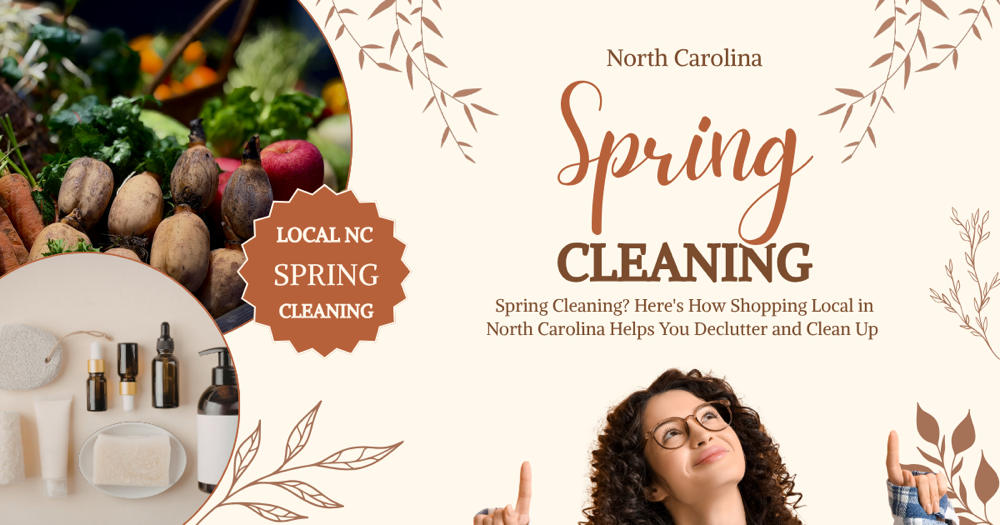
Spring cleaning season is here, and across North Carolina, as the pollen fades, many households are opening windows, clearing clutter, and refreshing their homes. But spring cleaning does not have to mean filling trash bags or buying disposable products. With a more intentional approach, shopping local can help you declutter and clean more sustainably while supporting North Carolina's small businesses.
Decluttering the North Carolina Way: Reuse First, Replace Thoughtfully
As you declutter closets, kitchens, and storage areas, it is tempting to toss unwanted items and start fresh. Instead, many North Carolina communities offer local solutions that keep usable goods out of landfills.
Across the state, local co-ops, thrift stores, and resale shops make it easier to donate or pass along items responsibly. For example, Tidal Creek Co-op in Wilmington promotes waste reduction and mindful consumption, encouraging shoppers to think about the full life cycle of products they bring home.
When it is time to replace something, shopping from local North Carolina businesses encourages more thoughtful purchasing. You choose items for durability, function, and long-term use rather than quick fixes that create more clutter down the road.
Sustainable Cleaning Supplies from NC Small Businesses
Spring cleaning often comes with a restock of household cleaners, but many conventional products rely on single-use plastics and harsh chemicals. North Carolina has a growing number of locally owned shops offering eco-friendly alternatives.
In Cary, Mindful Merchant specializes in refillable, low-waste household and personal-care products. Customers can bring their own containers and refill what they need, cutting down on plastic waste while reducing exposure to harsh ingredients.
Willabee Market in Southern Pines also focuses on thoughtfully sourced, sustainable goods, making it easier to swap disposable items for reusable options.
- Refillable or bulk cleaning products
- Concentrated cleaners that reduce packaging
- Reusable cloths, scrub brushes, and cleaning tools
- Plant-based, low-toxicity formulas that are safer for families and pets
Buy Once, Buy Well: Quality Over Quantity
One of the most effective ways to prevent future clutter is to invest in quality items that last. Many North Carolina-owned home, garden, and specialty shops prioritize well-made goods over mass-produced alternatives.
From storage baskets and kitchen tools to organization systems and household essentials, buying quality locally means:
- Fewer replacements
- Less long-term waste
- A home that stays organized longer
Local shop owners also offer personalized recommendations that help you choose what truly fits your space and lifestyle.
Supporting Sustainable, Community-Based Economies in NC
Shopping local during spring cleaning keeps money circulating in North Carolina communities. Small businesses are more likely to source regionally, reduce shipping emissions, and invest back into their neighborhoods.
Many local businesses also support sustainability through repair and reuse programs, donation partnerships, responsible sourcing, and community clean-up or recycling efforts.
A Cleaner Home and a Greener North Carolina
Spring cleaning is about more than a tidy space. It is an opportunity to align your home with your values. By decluttering responsibly and shopping local, you reduce waste, support North Carolina small businesses, and make choices that are better for the environment.
This season, as you clean, sort, and simplify, consider keeping your dollars and your impact close to home.
Explore Local BusinessesQuick Tips: Sustainable Spring Cleaning in North Carolina
- Donate locally: Look for NC thrift stores, nonprofit donation centers, or resale shops before tossing items.
- Choose refill options: Support local refill stores or shops offering bulk cleaning products.
- Skip fast replacements: Replace only what is truly needed and buy durable, well-made items.
- Ask local experts: Small business owners often know the best sustainable options for NC homes.
- Think long-term: Fewer, better items mean less clutter and less waste over time.